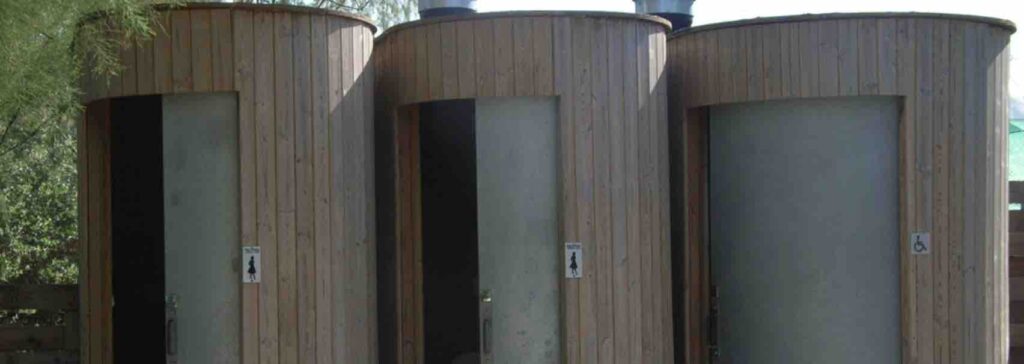
Septic tank effluent and municipal sewage between them comprise one of the largest impacts on water quality in Ireland. Many conventional sewage treatment methods can offer excellent filtration properties, but can be expensive and energy intensive to implement and maintain. Nature based solutions can be used for treatment of domestic septic tank effluent and municipal sewage. These can offer excellent treatment, as well as habitat value, low energy input and carbon sequestration. They include constructed wetlands, reed beds, willow filters, source separation technologies and other similar systems.
| What we offer: Training & workshops Books Please note that we no longer offer sewage treatment designs. We do however offer water management plans which may include sewage treatment elements. |

Links to nature-based solutions for wastewater treatment:
What is the most eco-friendly sanitation system?
Summary of reed bed and constructed wetland treatment systems: Reed Bed Systems & Treatment Wetlands
Overview of zero-discharge and willow filter systems: Willow System Options
Overview of compost toilet types and applications: Dry Toilet Info
Download our open-source compost toilet designs for emergency situations. The Temporary Design allows for quick construction to protect the local environment and provide people with access to private, safe and clean facilities in an emergency situation. The Permanent Design is more labour- and materials-intensive to build, but is better suited to longer term use. These designs provide a quick summary of just two of the many different dry sanitation options that are available online. The designs are available in English and French. FH Wetland Systems is grateful to translators Paul Lenoir and Carole Lesimple and to Rossion Inc. Print at A4 size.
External links for further information:
- A Community Guide to Environmental Health. Chapter 7 of this resource provides a through overview on Building Toilets for emergency situations.
- Ecological Sanitation Research website is an invaluable resource for dry toilet systems, with Ecological Sanitation being a good concise document if you want to learn more about this subject before building.
- Toilets that Make Compost is another EcoSanRes document. This shows further advice on many aspects of building and maintaining your own system. Available in English and French.
- The EcoSanRes Factsheets are a good place to start if you want quick guidelines on the subject.
- L’uritonnoir Dry Urinal. This is an ingenious French design that funnels urine into a large round straw bale. The nitrogen in the urine composts the carbon in the straw and after 12 months you have nutrient rich compost. A simpler model is to stand a small square bale on edge so that the straw bristles are standing vertically and peeing directly on that. Screen for privacy and add new bales as needed. Although this only caters for half the population, that’s still a 50% reduction on the urine entering the pit toilets, thus reducing the impact on groundwater.
- Joseph Jenkins’ Humanure Handbook site The classic guide to humanure composting. Jenkins uses the bucket system with an external compost area. It’s quick and easy to set up, but requires more day to day management than the two designs presented above.
- “The Perfect Privy” Built-it-yourself guide in pdf format.
- The Specialist Short guide in pdf format